
In this story
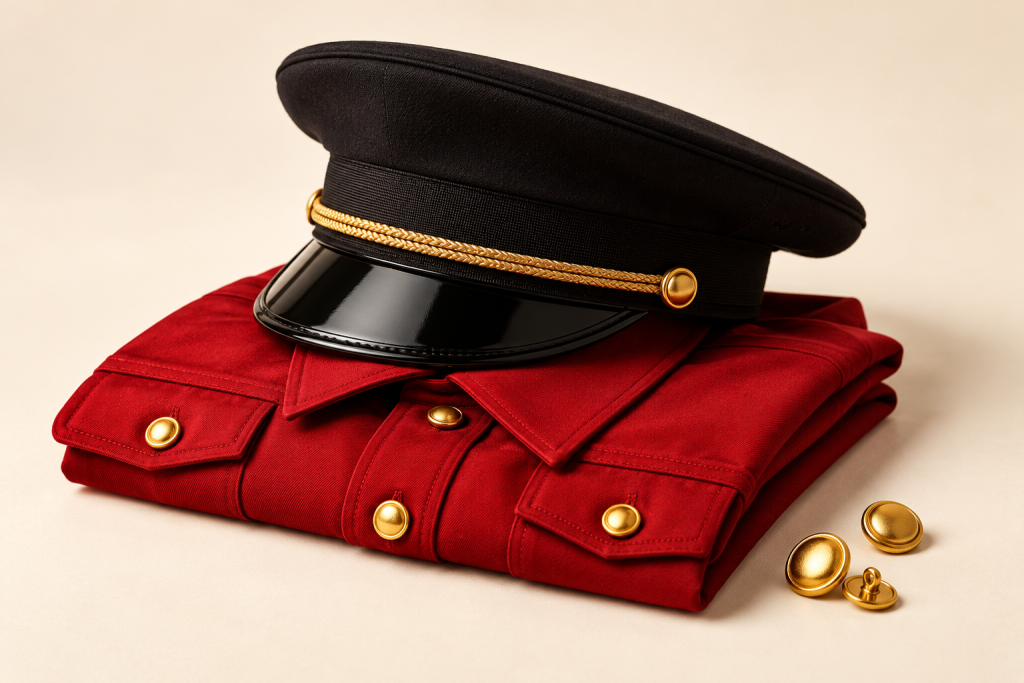
Uniform role-play uses clothing and fictional roles to create an agreed adult scenario. It can overlap with military, sports or workwear interests, but the focus here is the character rather than a particular fabric. Some people enjoy dressing up without sexual contact.
History and cultural context
Uniforms are visible in gay art and styling, including the work of Tom of Finland. That documented imagery provides a cultural reference, not a complete origin for uniform fantasy. Real occupations have their own histories, which should not be mistaken for the history of consensual role-play.
Why people practise it and what they enjoy
A recognisable outfit can make a character easier to inhabit. People may enjoy structure, theatricality or a deliberate change from everyday identity. Others respond mainly to shape and detail. The role need not reproduce real authority, and enjoyment does not imply endorsement of the institution being portrayed.
Safety considerations
Choose comfortable clothing and harmless props. Do not involve real weapons, hazardous tools, medical procedures or industrial environments. Equipment associated with a profession is not safe simply because it looks authentic. Agree physical activities separately, and make removing a costume or stopping straightforward.
Consent and ethical concerns
A costume does not create actual professional authority. Avoid misleading bystanders or involving people who are working. Agree names, language and the point at which the fictional scenario ends. Respect symbols with painful histories and avoid assuming a uniform wearer’s motives. Clothing, character and sexual consent are separate decisions.
Sources and further reading
Työväenmuseo Werstas: Touko Laaksonen
Tom of Finland Foundation: Tom’s influence on fashion
For adults aged 18 and over. This is an introductory educational guide, not personalised medical advice or practical training. Interests vary and are not shared by all gay men or exclusive to them.