In this story
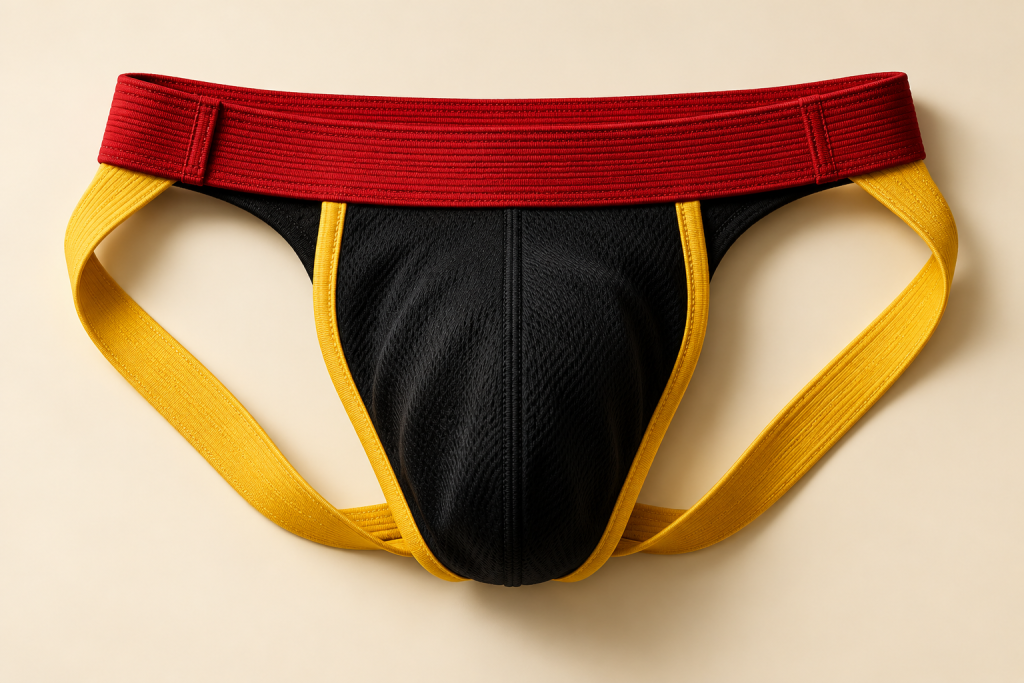
A jockstrap fetish focuses on the athletic supporter’s design, feel or associations. Some people wear jocks as everyday underwear or sports equipment; others enjoy them as erotic clothing. Those uses can overlap without meaning the same thing.
History and cultural context
Jockstraps began as functional support garments for cyclists and later became associated with sport more broadly. The V&A traces that practical clothing history. Their place in contemporary gay styling is a separate cultural development: an object designed for support can acquire meanings its original maker did not intend.
Why people practise it and what they enjoy
The combination of coverage, exposed skin and an athletic silhouette can appeal. Some enjoy a wide waistband, the feeling of support, or the confidence of choosing deliberately expressive underwear. Others are drawn to nostalgia or sports imagery. A jockstrap need not communicate availability, a body ideal or a particular identity.
Safety considerations
Choose a fit that does not pinch, rub or cause numbness. Wash garments according to their label and let irritated skin recover. A fashion jockstrap is not necessarily protective sports equipment, and an ordinary supporter is not a substitute for a suitable protective cup where a sport requires one.
Consent and ethical concerns
Respect people wearing a jock for comfort or exercise. Changing rooms remain shared facilities with privacy expectations, not automatically consenting settings. Avoid judging bodies against advertising imagery. If an event has a clothing policy, participants still retain the right to decline touch, photographs or sexual attention.
Sources and further reading
V&A: A brief history of men’s underwear
For adults aged 18 and over. This is an introductory educational guide, not personalised medical advice or practical training. Interests vary and are not shared by all gay men or exclusive to them.