
In this story
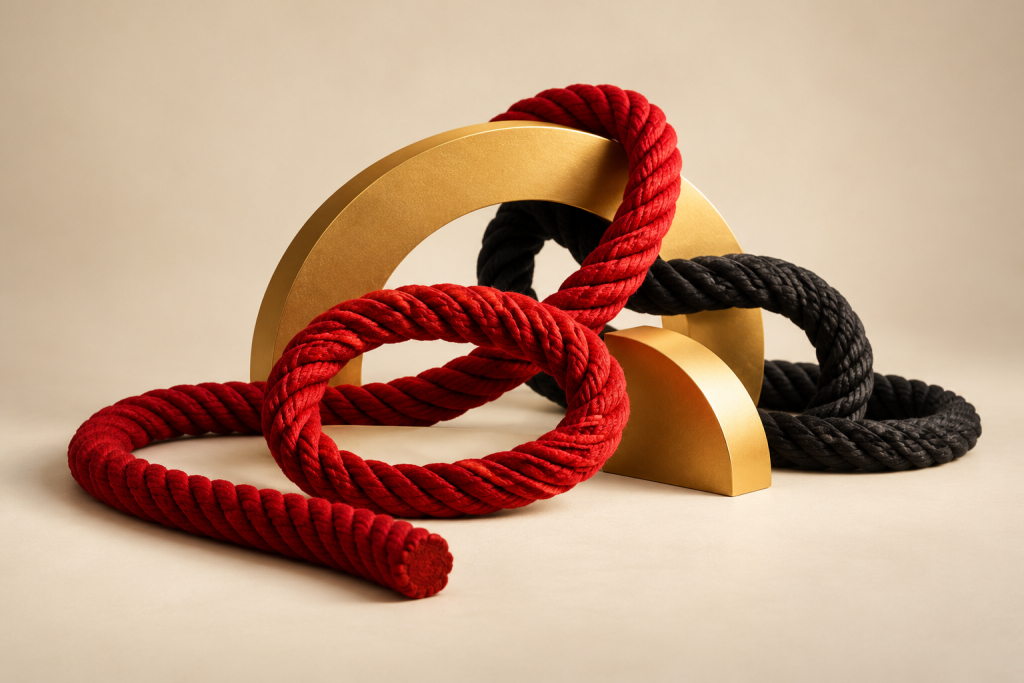
Rope bondage uses rope in consensual restraint or decorative arrangements. Some participants value visual composition, while others enjoy a negotiated exchange of control. Decorative rope, floor-based restraint and suspension involve different risks and should not be treated as equivalent.
History and cultural context
Rope has multiple practical and cultural histories. Contemporary erotic rope communities draw on varied influences, including Japanese-associated styles, but reducing them to a single unbroken ancient tradition is misleading. The sources reviewed here do not support a detailed origin timeline for each named style.
Why people practise it and what they enjoy
People may enjoy learning a craft, attentive collaboration, patterns or the feeling of carefully agreed containment. A shared artistic activity can be meaningful without sexual contact. These possibilities do not make rope therapeutic treatment or guarantee that it will feel calming to every participant.
Safety considerations
Rope pressure can affect nerves even before a person notices obvious pain. Keep communication and immediate release possible; do not leave someone restrained alone. Tingling, numbness, weakness or unusual coldness means stopping. Do not copy suspension or neck arrangements from photographs. Seek hands-on instruction appropriate to the activity; persistent or sudden serious symptoms need medical care.
Consent and ethical concerns
Discuss touch, clothing, marks, photography and the right to stop before beginning. Do not equate technical skill, artistic reputation or community status with trustworthiness. A model or rope partner remains a collaborator with changing needs. No photograph or planned pattern is more important than their comfort and autonomy.
Sources and further reading
Bishopsgate Institute: UK Fetish Archive
For adults aged 18 and over. This is an introductory educational guide, not personalised medical advice or practical training. Interests vary and are not shared by all gay men or exclusive to them.