
In this story
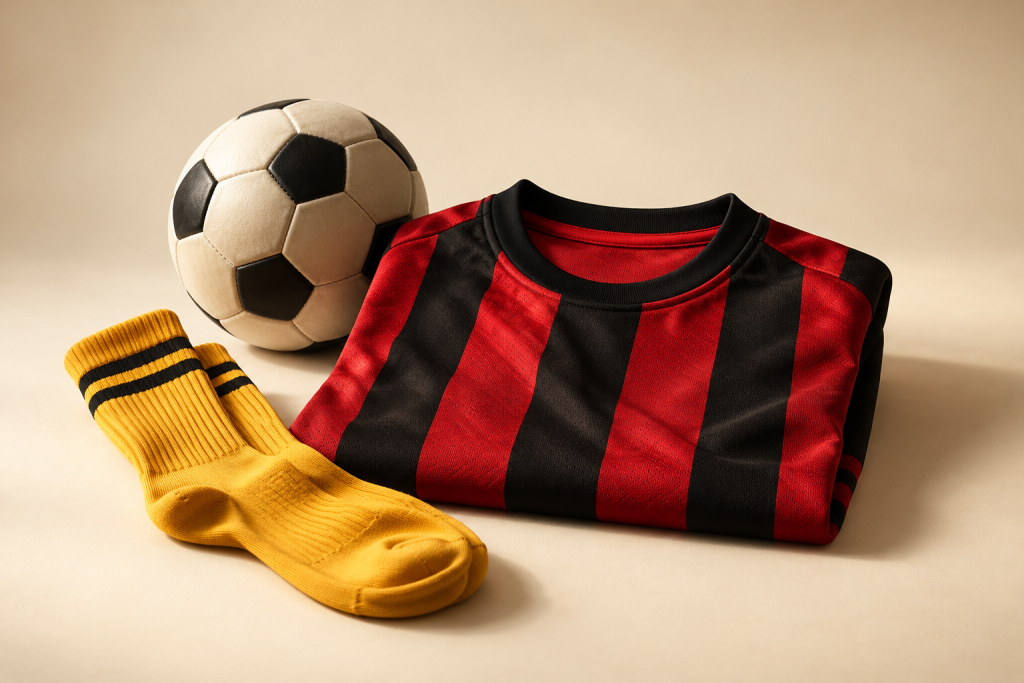
Sports kit fetish involves attraction to clothing associated with sports, such as football shirts, rugby shorts or wrestling gear. Some enjoy the outfit itself; others respond to a fictional sporting role. Being interested does not require athletic ability.
History and cultural context
Sportswear’s practical history and its erotic meanings are distinct. Museum collections document athletic underwear becoming part of wider visual culture, but that does not establish one origin for every kit-related fetish. The history is better understood as changing uses of familiar clothing than as a single invention.
Why people practise it and what they enjoy
Team colours, fabric and recognisable silhouettes can make an outfit meaningful. Some people enjoy an imagined sense of camaraderie, confidence or playful competition. Others appreciate the clothing’s comfort or connection to a partner. Fantasies about sport should not be confused with the motives of actual athletes.
Safety considerations
Change out of damp kit and launder shared items appropriately. Skin infections can spread through contact and contaminated belongings. Protective sports equipment must be appropriate for its actual use; decorative replicas offer no assurance of protection. Avoid forcing stretches, wrestling or physical challenges beyond anyone’s ability.
Consent and ethical concerns
Keep role-play to consenting adult settings. Real changing rooms, matches and training sessions include people who have not agreed to participate. Ask before photographs, and avoid sexualising strangers because of their kit. Inclusive enjoyment leaves room for different ages over 18, bodies, disabilities and levels of sporting interest.
Sources and further reading
V&A: A brief history of men’s underwear
For adults aged 18 and over. This is an introductory educational guide, not personalised medical advice or practical training. Interests vary and are not shared by all gay men or exclusive to them.