In this story
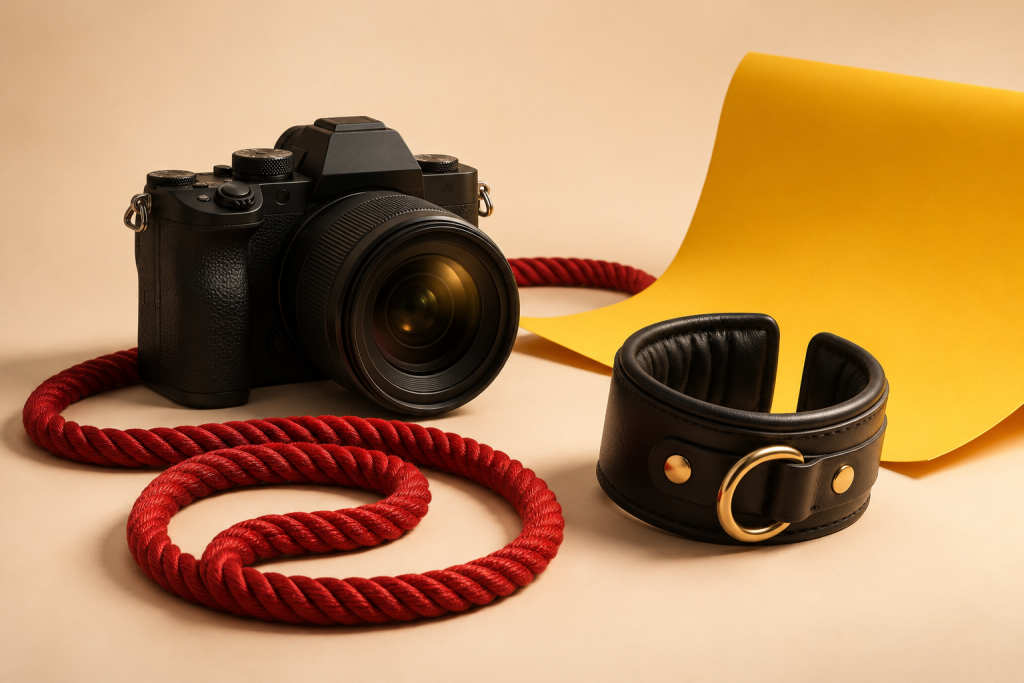
A bondage photograph brings together visual storytelling and the responsibilities of working with a person who may be posing in a vulnerable setting. Planning the image, the physical arrangements and the permissions separately makes it easier to keep creative enthusiasm from overriding a participant’s choices.
Staging is part of the image
Fetish and kink archives preserve photographs as well as clothing and publications. Such images are cultural objects, but a finished picture rarely explains how it was produced. An apparently restrictive pose may be staged, supported or edited. Viewers should not treat it as a tutorial, and photographers should not needlessly increase physical risk to make a scene look convincing.
Agree on the brief before the session
Discuss the intended mood, clothing, visible body areas and whether any restraint is actually necessary. A loosely placed prop or an unrestrained pose may achieve the visual idea. Make clear who will be present and which images are being attempted. If the creative brief changes, pause for a real conversation rather than asking the subject to decide while already uncomfortable.
Physical supervision and time
The person responsible for a participant’s physical wellbeing must remain attentive even when the camera needs adjusting. Do not leave a restrained subject alone to review images. Avoid positions that interfere with breathing and end any setup that causes numbness, unexpected pain, distress or difficulty communicating. Good lighting and a flattering angle never justify continuing through a warning sign.
Permission to pose and permission to publish
Discuss selection, storage, editing, credits and the intended audience. Clarify whether the subject can review images and what happens if they decline publication. Tattoos, rooms and recognisable gear may identify someone without a face. Payment for a session does not make every possible future use self-evident; record the agreed uses in ordinary, understandable language.
What image ownership does not settle
Copyright arrangements and a person’s boundaries are separate questions. Do not assume that holding the camera removes the need for agreement about sensitive publication. Get appropriate professional advice for a commercial contract rather than relying on a generic template. A useful collaboration includes a clear route for raising concerns after the shoot, not just consent gathered once at its beginning.
Related guides
Rope Bondage: Craft, Connection and Physical Risk
Decorative Rope Art: Appearance, Craft and the Limits of a Photograph
Sources and further reading
Bishopsgate Institute: UK Fetish Archive
For consenting adults aged 18 and over. Interests and identities vary; no topic is assumed to be shared by all gay men or exclusive to them. This educational guide does not replace individual medical, legal or financial advice.