In this story
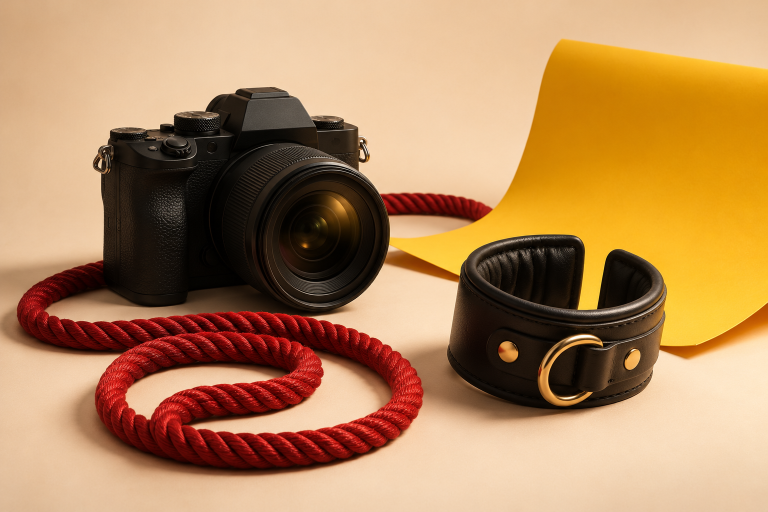
Rope can be a visual material as well as equipment. Colour, line and pattern may appeal to people who enjoy its appearance but do not want restraint. Distinguishing decorative art from physical technique helps keep a photograph or costume from becoming an unsafe instruction.
Craft, imagery and cultural language
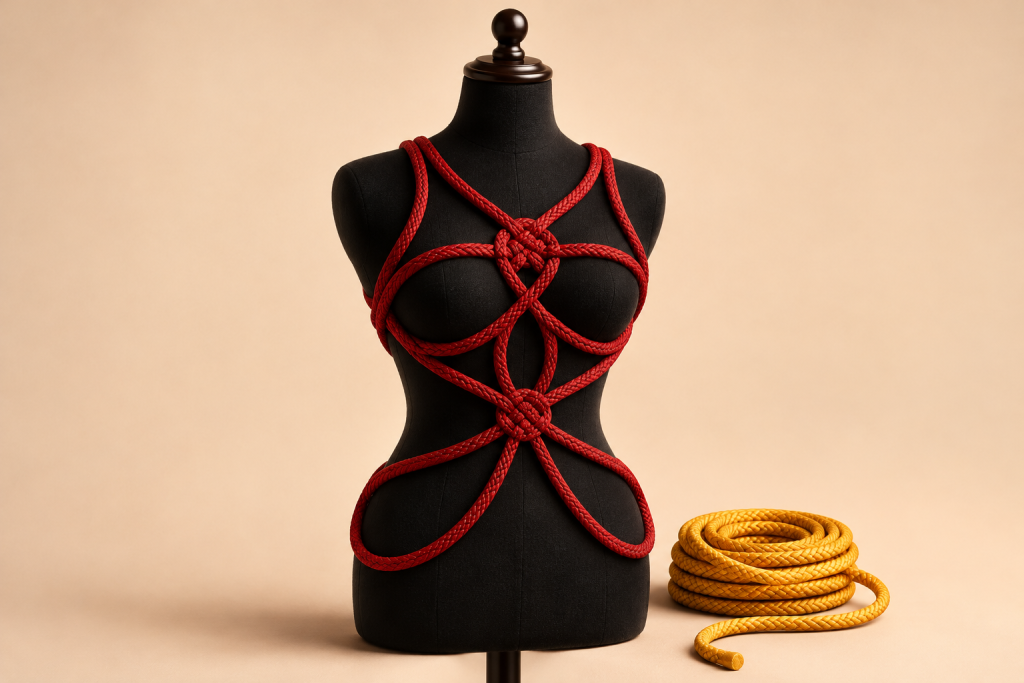
Rope imagery appears in several artistic and kink contexts. Terms such as shibari and kinbaku are associated with Japanese rope traditions, but they should not be used as automatic labels for every pattern made from cord. A decorative arrangement on a display form can borrow an aesthetic without claiming historical authenticity or the expertise of a rope practitioner.
Why the visual element can be enough
Some adults enjoy symmetry, contrasting textures or the process of creating a temporary composition. Others find that a photographed pattern suggests a role they prefer to keep imaginary. Visual appreciation does not require a progression towards restraint. Working on an inanimate form, a flat surface or a still life can provide creative satisfaction without asking a person to tolerate pressure.
A photograph does not reveal a method
An image may hide supports, an uncomfortable position, a quick release or the fact that no actual restraint is present. Editing can alter the apparent geometry. Do not copy an arrangement onto a body because it looks simple or assume that a decorative knot has any load-bearing purpose. This article provides no tying, suspension or restraint instructions.
When a person is part of the artwork
Discuss contact, placement, clothing and the right to stop before creating a composition. A decorative intention does not prevent pressure, trapped movement or nerve injury. Pain, tingling, numbness or weakness calls for ending contact and assessment. Never place pressure on the neck or interfere with breathing. Learning to make an attractive picture is different from learning to manage physical risk.
Credit, context and representation
Obtain agreement for photographs and captions as well as for the arrangement itself. Describe a staged image honestly rather than implying that it documents a real relationship or a particular technique. Credit the people whose creative work you use, and respect a participant’s decision to keep an image private. Artistic interest can stay collaborative when everyone controls how they are represented.
Related guides
Rope Bondage: Craft, Connection and Physical Risk
Bondage Photography: Staging, Consent and Image Ownership
Sources and further reading
Bishopsgate Institute: UK Fetish Archive
For consenting adults aged 18 and over. Interests and identities vary; no topic is assumed to be shared by all gay men or exclusive to them. This educational guide does not replace individual medical, legal or financial advice.