
In this story
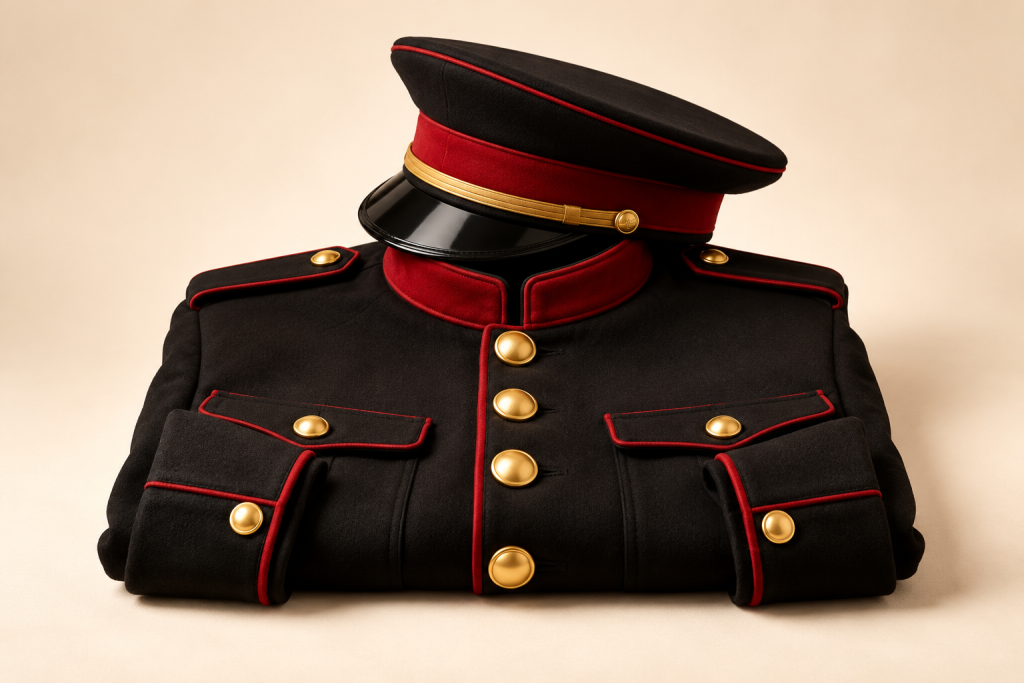
Military-inspired fetish can involve uniforms, boots, insignia-like styling or consensual role-play between adults. Attraction may concern order, appearance or imagined authority. It does not necessarily express support for warfare or a political organisation.
History and cultural context
Uniforms have a visible place in twentieth-century homoerotic imagery. The museum Werstas describes Tom of Finland’s interest in uniforms, while his Foundation documents the military styling of some drawings. These are examples of cultural influence rather than evidence that he invented uniform attraction.
Why people practise it and what they enjoy
Structured clothes, ritual and a clearly defined character can help adults step outside everyday roles. Some enjoy discipline as an agreed fantasy; others prefer collecting or styling clothing. The same outfit can evoke very different responses, including difficult memories, so enjoyment should never be assumed.
Safety considerations
Keep real weapons, live ammunition and hazardous equipment out of role-play. Clothing should fit without restricting breathing or circulation. Any physical activity needs its own consent and risk discussion; a uniform does not provide training or competence. Avoid impairment that makes communication or judgement unreliable.
Consent and ethical concerns
Fictional authority never removes the right to stop. Do not involve unsuspecting service personnel or use a costume to mislead the public. Symbols associated with persecution can harm others, including queer people; consider context and audience. A partner’s history and boundaries matter more than visual authenticity.
Sources and further reading
Työväenmuseo Werstas: Touko Laaksonen
Tom of Finland Foundation: Tom’s influence on fashion
For adults aged 18 and over. This is an introductory educational guide, not personalised medical advice or practical training. Interests vary and are not shared by all gay men or exclusive to them.