
In this story
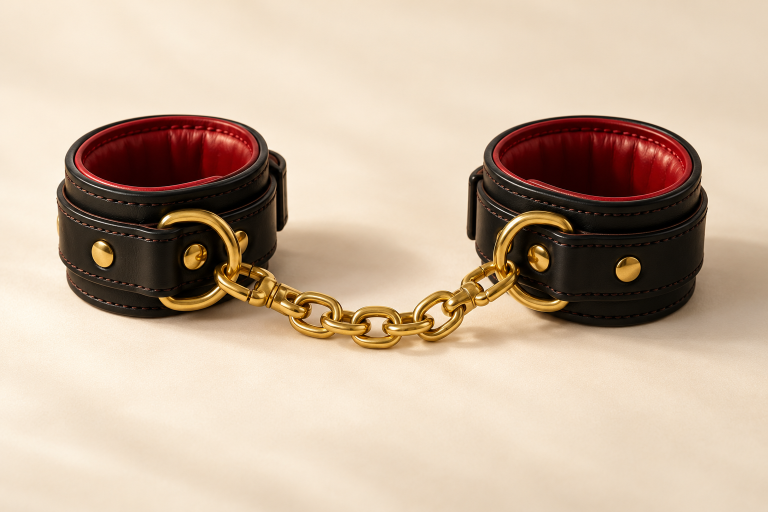
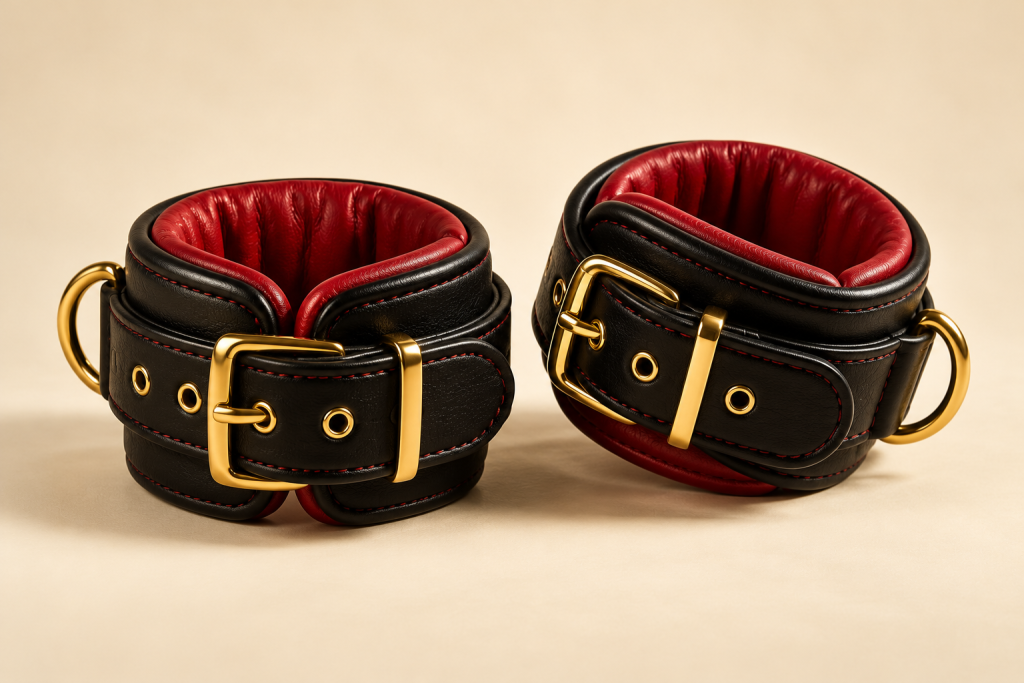
Cuffs can be worn as accessories or used in consensual restraint. Leather, fabric and metal versions feel different and have different limitations. Their appearance alone does not establish that a product is suitable for any particular use.
History and cultural context
Cuffs appear in both practical restraint history and fetish imagery. Those histories are not interchangeable: real detention and coercion do not become consensual because similar objects are used in a scene. The sources reviewed do not establish one distinct beginning for cuff fetish among gay men.
Why people practise it and what they enjoy
Some people enjoy a visible symbol of an agreed role, the dressing ritual or the sensation of a substantial accessory. Others prefer cuffs to rope as an aesthetic choice. A person can enjoy wearing them without wanting them fastened together or used for control.
Safety considerations
Pressure around wrists or ankles can injure nerves and affect circulation. Metal cuffs can concentrate pressure and tighten unexpectedly. Never leave a restrained person unattended, and do not rely on a single inaccessible key. Stop for pain, tingling, numbness, weakness or colour change. Avoid pulling against joints, suspension and any use near the neck.
Consent and ethical concerns
Ask about wearing, fastening, leading and restraint separately. A decorative cuff does not communicate permanent submission, and being restrained does not permit additional activities. Consent must remain withdrawable. Discuss public wear and photographs: an accessory that feels private to one person may have identifying meanings to another.
Sources and further reading
For adults aged 18 and over. This is an introductory educational guide, not personalised medical advice or practical training. Interests vary and are not shared by all gay men or exclusive to them.