In this story
A fictional scenario between adults that can focus on encouragement and team spirit, without turning role-play into unsafe exercise or real coaching authority.
An adult sporting scenario
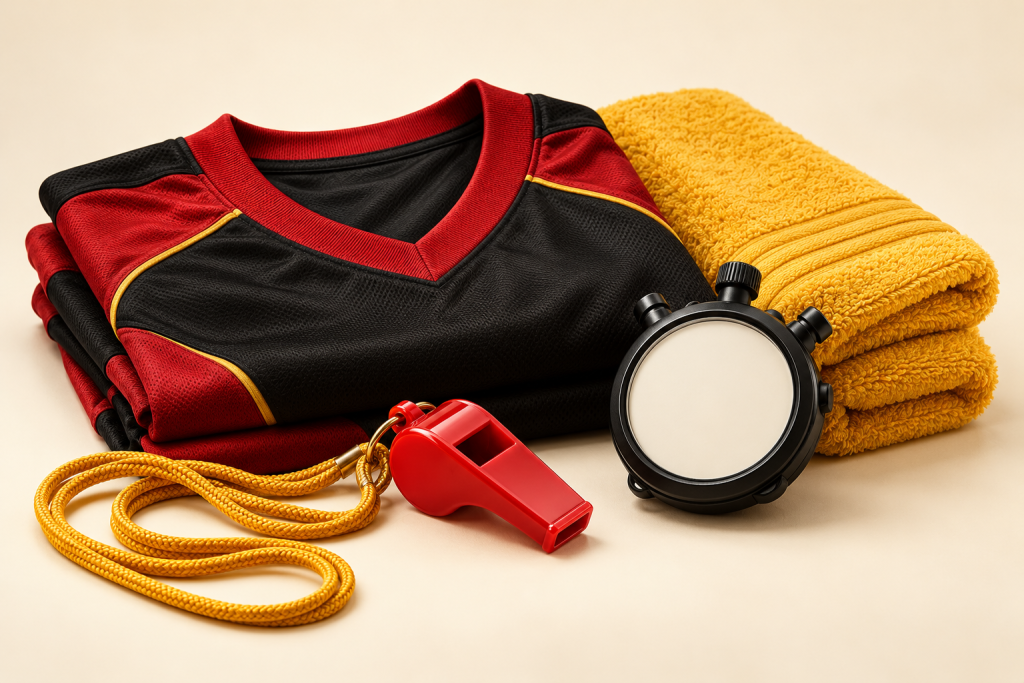
Coach and athlete role-play uses an imagined sporting relationship between adults aged 18 and over. Sportswear, a training schedule or the idea of encouragement can supply the setting. It need not involve an actual workout, competitive performance or a particular body type.
The characters are fictional adults, not school pupils, youth-team members or people whose sporting opportunities depend on a real coach. An interest in kit is also distinct from interest in authority: someone may enjoy a team shirt while disliking instruction or evaluation.
Find the part that actually interests you
Discuss whether the attraction is encouragement, a confident character, an imagined team identity, praise after a task or the visual style. A supportive mentor and an intimidating drill instructor are different fantasies. Do not assume that a whistle or stopwatch means someone wants shouting or physical challenges.
Choose roles that do not depend on someone pretending to have expertise. An invented pre-match conversation, discussing a fictional strategy or preparing a kit bag can provide the structure. These activities leave room for performance and humour without demanding athletic ability.
How a simple version unfolds
Begin with a brief shared check-in about the fictional event, continue with a harmless preparation task, then end with recognition of what each character contributed. The activity might be arranging kit or choosing a team colour. Its purpose is an agreed interaction, not achieving a fitness target.
For a cooperative variation, both participants are teammates and take turns offering encouragement. For a quieter version, remove the sporting language and retain only the attentive coaching style. Someone with limited mobility can participate through conversation and costume; adaptation is part of the creative process.
Why sports-based role-play can appeal
Sports imagery can suggest focus, camaraderie or the satisfaction of a clearly defined challenge. Some adults enjoy being noticed for effort rather than appearance. Others appreciate an opportunity to lead supportively or to wear clothing with personal significance. These meanings differ between individuals.
The scenario is not established here as a particularly common gay male preference. Nor should it be used to suggest that real athletes or coaches share an erotic interest. Its potential appeal comes from chosen associations, not from a claim that sport or a muscular physique implies sexual availability.
Keep fitness and fantasy separate
Do not introduce extreme exercise, forced stretching, dehydration, sleep loss or pain as proof of obedience. A role-play partner is not automatically qualified to prescribe training, diet or recovery. If ordinary exercise is included, it should already be appropriate for the person and remain freely chosen outside the character relationship.
Avoid shared changing rooms, active training sessions and real teams as settings for adult scenes. Other people’s participation in sport is not consent to fetish attention or photographs. Use clean kit and comfortable clothing, and keep physical contact separately agreed rather than treating the coach character as permission to handle someone.
Make encouragement genuinely welcome
Agree what kinds of praise or correction feel good and what would feel shaming. Comments about weight, disability, fitness or masculinity can have consequences beyond the fictional setting. No one needs to meet an appearance standard or tolerate an unwanted nickname to take part.
At the end, ask whether the structure felt supportive, patronising or too demanding. Adjust the role or leave it behind. A positive experience might simply reveal that someone enjoys clear encouragement; that can be carried into ordinary life without keeping the fictional hierarchy.
Related scenario guides
Uniform Inspection Role-Play: Ritual, Presentation and Fictional Rank
Boss and Assistant Role-Play: Fictional Authority, Real Equality
Sources and further reading
The Hotline: Healthy BDSM Relationships Are Possible
For consenting adults aged 18 and over. These are educational scenario ideas, not explicit scripts, medical advice or professional training. No scenario is assumed to be common to all gay men or exclusive to them.