In this story
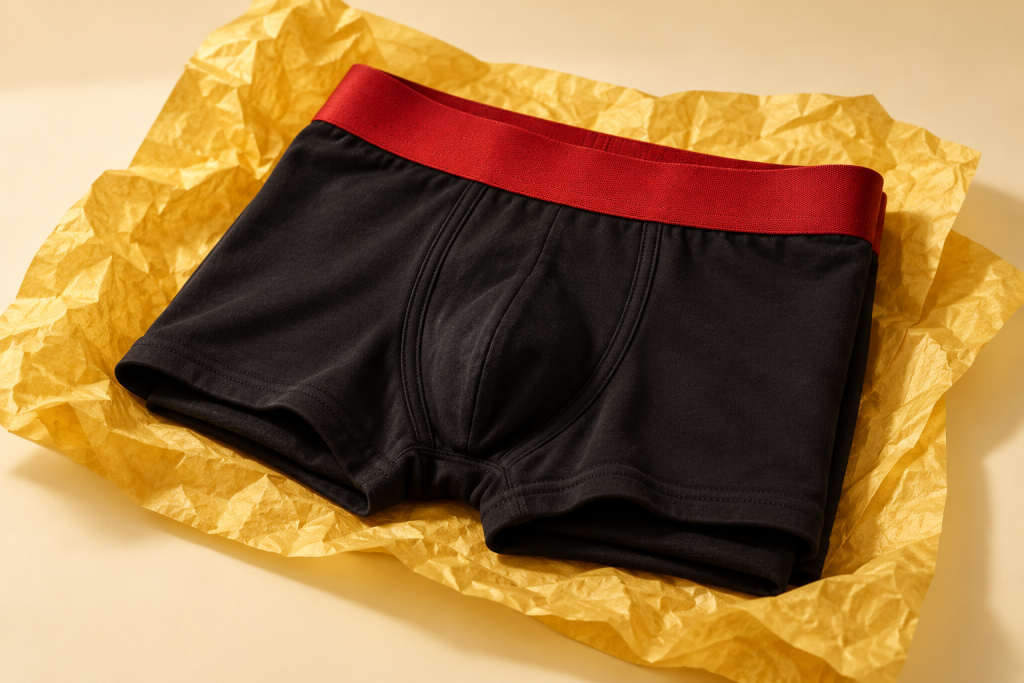
An underwear fetish is an attraction to underwear as an object, a style or a sign of intimacy. Briefs, boxers and other designs may appeal for different reasons. The interest can be visual or tactile, or connected with a particular person; it does not imply one preferred activity.
History and cultural context
Men’s underwear has moved between practical clothing, advertising and deliberate self-display. The V&A documents this changing relationship between intimate garments and public imagery. A garment’s invention can be dated more confidently than the first moment it became erotic to someone, so there is no useful single birthday for underwear fetish.
Why people practise it and what they enjoy
People may enjoy colours, fabric, fit or the balance between concealment and visibility. Choosing underwear can be a private expression of identity or a shared form of dressing up. The sense of intimacy may matter more than how revealing a garment is. Preferences can change and do not need a fixed explanation.
Safety considerations
Comfort and hygiene still matter. Launder items appropriately and avoid wearing anything that causes chafing, a rash or loss of sensation. Sharing clothing can spread some skin infections. A seller’s claims about an item’s condition cannot establish that it is hygienic or medically safe.
Consent and ethical concerns
Borrowing, buying or exchanging intimate garments requires clear permission. Never take someone’s clothing or images without consent. Discuss privacy, payment and expectations before any exchange, and do not pressure people to reveal identifying details. Underwear preference says nothing reliable about sexual role or willingness to participate.
Sources and further reading
V&A: A brief history of men’s underwear
For adults aged 18 and over. This is an introductory educational guide, not personalised medical advice or practical training. Interests vary and are not shared by all gay men or exclusive to them.