In this story
Neoprene has a different character from both traditional leather and thin latex. Its structure can make a garment feel sporty, sculptural or protective, which helps explain its appeal within some gay gear communities. Enjoying the look does not require adopting a particular sexual role.
From industrial material to personal style
Neoprene is a synthetic rubber associated with twentieth-century polymer research at DuPont. The Science History Institute places its development in the laboratory of Wallace Carothers in 1930. That material history is separate from the history of individual fetish garments: an industrial invention date does not establish when a particular community began enjoying it.
What people may enjoy
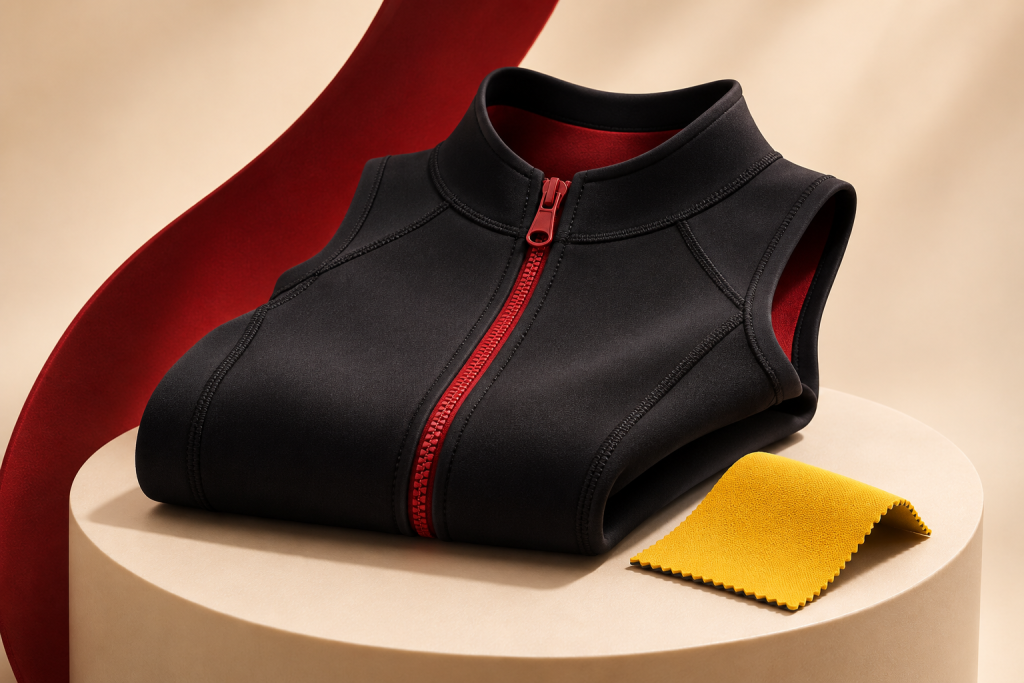
Foam-backed neoprene can hold its shape, creating a defined silhouette without the drape of ordinary jersey fabric. Some people like the contrast between a soft surface and a structured outline; others value the associations with water sports, athletic equipment or modern gear design. The attraction may concern appearance alone, and different products can feel quite different despite sharing the same marketing term.
Choosing a garment for your own use
Ask what the garment is actually made from, how it closes and how it should fit. Consider how easily you can sit, reach and take it off without help. A costume hood, sports vest and lined accessory raise different questions. If you are buying for social events, check whether the outfit works with the venue’s temperature and the length of time you expect to wear it.
Comfort and care
Insulating clothing can become uncomfortable in a warm room. Plan breaks and access to ordinary drinking water rather than treating warmth as part of an endurance challenge. Dizziness or feeling unwell calls for stopping and cooling down. Follow the manufacturer’s cleaning and drying instructions, including those for linings and adhesives, and discontinue an item if it causes skin irritation.
Social meaning remains personal
A neoprene garment does not identify its wearer as a pup, a submissive or an available partner. Ask before touching the material or borrowing an accessory. Let someone describe their own relationship to the outfit, including the possibility that it is simply clothing they like. Good gear conversations make room for budget, sensory preferences, different bodies and changing tastes.
Related guides
Rubber and Latex Fetish: Material, Identity and Appeal
PVC and Vinyl Clothing: Shine, Style and Material Differences
Sources and further reading
Science History Institute: Wallace Hume Carothers
NHS: Heat exhaustion and heatstroke
For consenting adults aged 18 and over. Interests and identities vary; no topic is assumed to be shared by all gay men or exclusive to them. This educational guide does not replace individual medical, legal or financial advice.