In this story
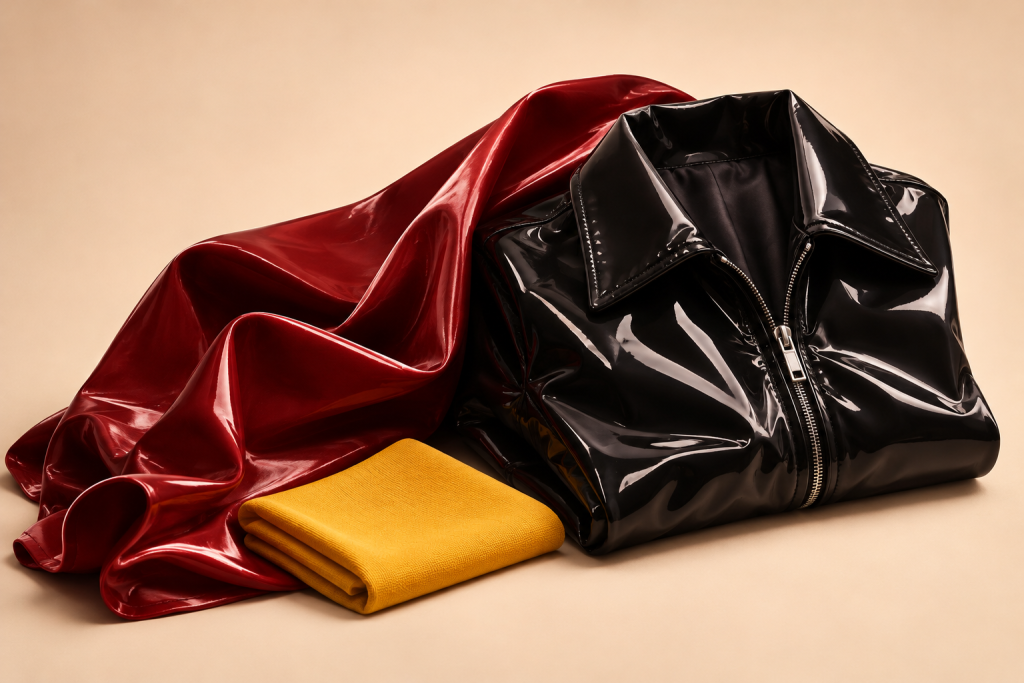
PVC and vinyl clothing can produce a strong visual effect through shine, colour and shape. In fetish fashion, the appeal often lies in that deliberate transformation. Understanding the material also helps separate practical questions about fit and care from assumptions suggested by a photograph.
A material history rather than a single fetish origin
PVC stands for polyvinyl chloride. MIT’s Lemelson programme describes Waldo Semon’s work in the 1920s on making the rigid polymer more flexible and useful. Plasticised PVC later became part of many consumer products. Its technical development does not establish one origin for shiny-clothing fetishes, which belong to a wider and varied history of fashion and personal meaning.
PVC, vinyl and latex are not interchangeable
Vinyl is commonly used as a clothing label for PVC-coated materials, but a shop’s terminology may be imprecise. Some garments have a textile backing, while others use different coatings or blends. Latex is a different material. Read the actual composition and care label rather than assuming that every glossy item will stretch, breathe or respond to products in the same way.
Why the appearance can matter
A reflective surface exaggerates movement and changes how a familiar garment catches light. Some adults enjoy the futuristic look; others prefer an association with rainwear, clubwear or costume. The same trousers or jacket can be fashion, fetish gear or both. Neither the level of shine nor the cost of an outfit measures a person’s experience or community standing.
Fit, heat and storage
Check movement at shoulders, hips and seams before committing to a long outing. A striking finish can still be uncomfortable against irritated skin or in warm conditions. Use the maker’s cleaning guidance and ask about contact with other dyes, plastic surfaces or care products. Keep items away from heat sources and avoid forcing an ageing coating that has become sticky, brittle or cracked.
Keeping the outfit under the wearer’s control
Discuss any plan to photograph, touch or style another person’s clothing. A shiny surface may attract attention without inviting intimate contact. Buying a garment for a partner should not create an obligation to wear it, maintain a certain body shape or enact a role. An outfit works best when its wearer remains free to enjoy it on their own terms.
Related guides
Rubber and Latex Fetish: Material, Identity and Appeal
Neoprene Gear: Texture, Structure and Everyday Comfort
Sources and further reading
Bishopsgate Institute: UK Fetish Archive
For consenting adults aged 18 and over. Interests and identities vary; no topic is assumed to be shared by all gay men or exclusive to them. This educational guide does not replace individual medical, legal or financial advice.