
In this story
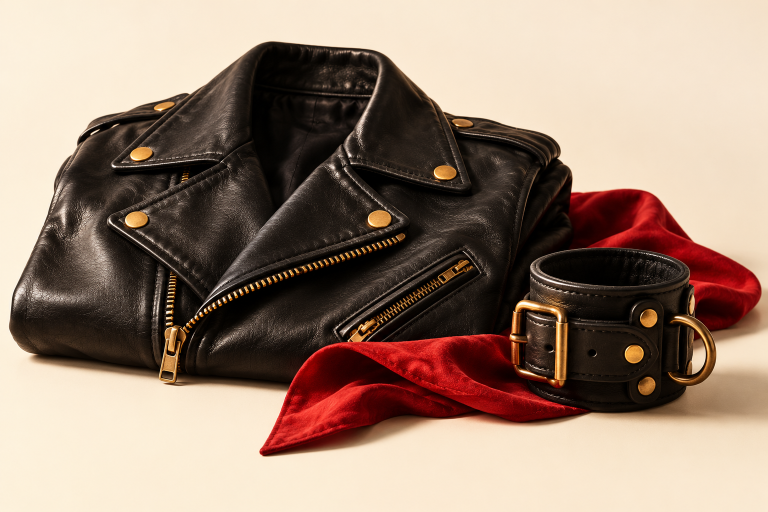
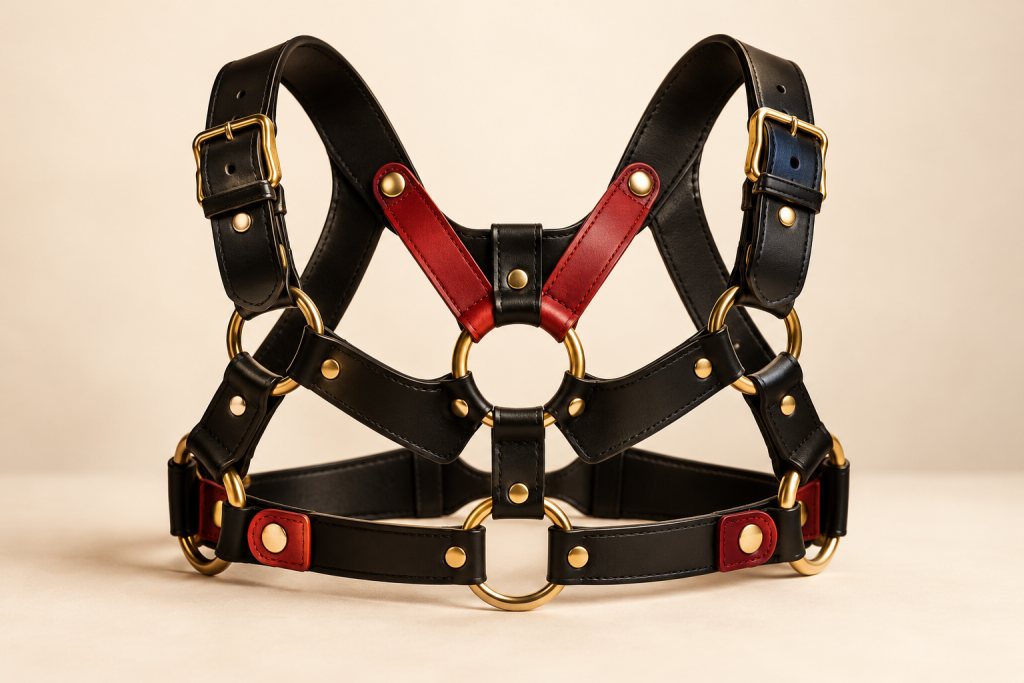
Harness fetish involves an attraction to straps worn around the torso or other body areas. A harness can be decorative fashion, a symbol of belonging, or part of an agreed scene. Its presence alone does not reveal what its wearer wants.
History and cultural context
Harnesses have many practical histories, but fashion and fetish versions should not be treated as direct descendants of one single tradition. Leather and fetish archives preserve clothing alongside community records. They provide a setting for understanding harness culture without establishing one inventor or universal origin for the attraction.
Why people practise it and what they enjoy
People may enjoy the geometry of straps, the contrast with skin or clothing, or a feeling of being framed and supported. Putting on a harness can mark a transition into a social or imaginative role. Others enjoy craftsmanship and styling without any interest in restraint.
Safety considerations
Fit and intended use are crucial. A fashion harness must not be used for suspension, lifting or forceful restraint simply because it has rings. Check for rubbing, pressure, allergic reactions to materials and restricted movement. Release it if there is discomfort or altered sensation. Never use neck pressure or airway restriction as a routine extension of wearing gear.
Consent and ethical concerns
Ask before grabbing straps: a handle-like appearance is not permission. Agree to each use separately, including leading or posing for photographs. Avoid assigning dominant or submissive roles from colour or design alone. A harness can be enjoyed by different bodies and genders without a required look or level of experience.
Sources and further reading
Bishopsgate Institute: UK Fetish Archive
NHS: There is no safe way to strangle
For adults aged 18 and over. This is an introductory educational guide, not personalised medical advice or practical training. Interests vary and are not shared by all gay men or exclusive to them.