In this story
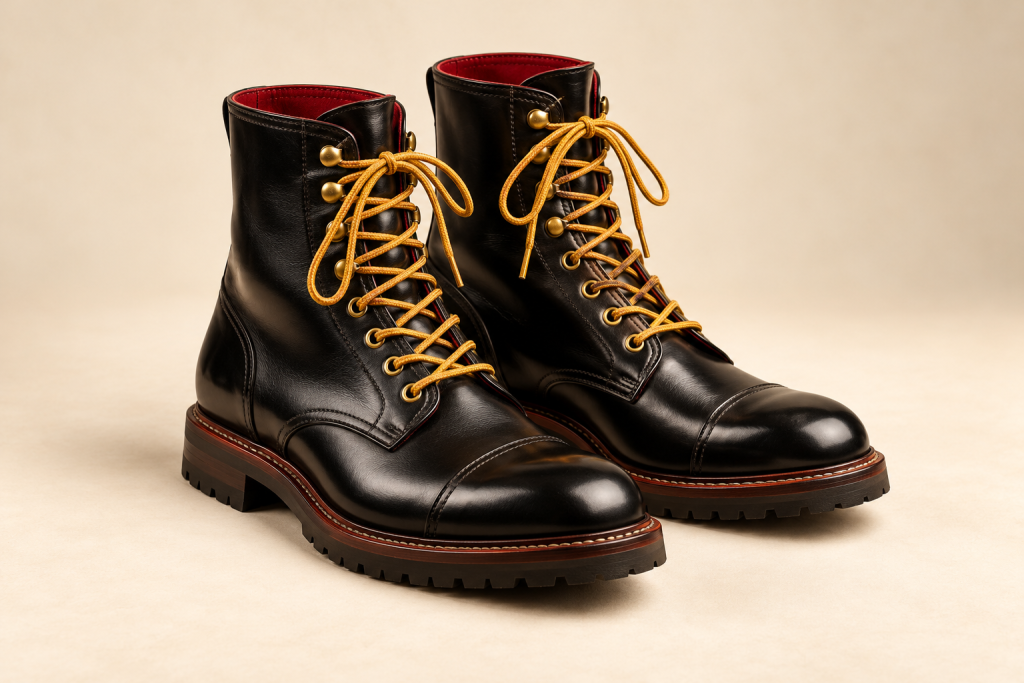
Boot fetish is an attraction to boots, their material, shape, scent or symbolism. Some people also enjoy boot care as a ritual of attention or service. Neither a boot wearer nor someone polishing boots must be taking part erotically.
History and cultural context
Boots form part of the motorcycle and street clothing described in accounts of postwar gay leather culture. Their practical functions and visual associations helped make them recognisable within that aesthetic. This cultural history does not establish a single first boot fetishist or explain every contemporary preference.
Why people practise it and what they enjoy
People may enjoy weight, sound, craftsmanship and the way footwear changes an outfit. Caring for boots can create a focused shared activity. A person might connect boots with confidence, authority or service, while another simply enjoys their appearance. Meanings should be discussed rather than read as a fixed code.
Safety considerations
Outdoor soles can carry dirt and chemicals. Cleaning and polish products should be kept away from mouths, eyes and broken skin, and used with ventilation as directed. Avoid activities involving crushing, standing on another person or neck pressure. Footwear designed to carry its wearer’s weight is not equipment designed to bear weight on someone else.
Consent and ethical concerns
Ask before touching boots or offering a service. Agree whether a care session is social, erotic, paid or unpaid. Respect accessibility needs and people who cannot wear heavy footwear. Expensive brands and flawless polish are not measures of community membership or moral worth.
Sources and further reading
For adults aged 18 and over. This is an introductory educational guide, not personalised medical advice or practical training. Interests vary and are not shared by all gay men or exclusive to them.