In this story
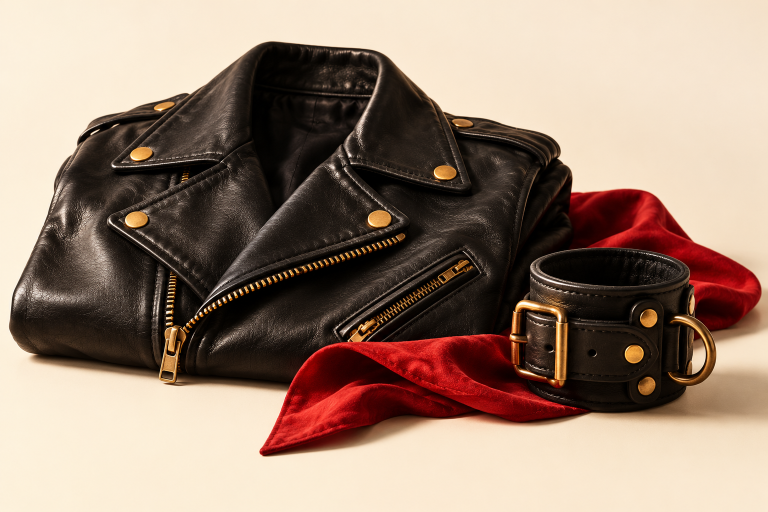
A personal gear identity can combine materials rather than follow a single dress code. Leather, rubber and sportswear offer different textures, associations and ways of presenting yourself. This guide explores how gay men can enjoy that variety without treating an expensive wardrobe as an entry requirement.
Where the mixed-gear look comes from
Leather culture developed through gay bars and motorcycle clubs in the mid-twentieth century. Later communities built their own relationships with rubber, sportswear and other clothing. These histories overlap, but they are not interchangeable: a rubber enthusiast does not automatically identify as a leatherman, and wearing sports kit need not mean identifying with BDSM. The UK Fetish Archive preserves evidence of several communities sharing a wider cultural space.
Why combining materials appeals
Some people enjoy contrast: a structured jacket beside a soft jersey, or a polished surface against matte fabric. Others find that mixing familiar everyday clothing with one distinctive item makes self-expression easier. The attraction can be visual, tactile, social or sexual; the outfit does not determine which. Trying different combinations can also loosen the idea that there is one correct way for a gay man to look.
Choosing an outfit around your own priorities
Start with the quality you actually want: texture, colour, a silhouette or a connection to a community. A single well-fitting item can communicate that preference. Borrowing requires the owner’s permission, and second-hand purchases deserve a condition check. If a venue publishes a dress code, read it before buying anything. A specialist event may have requirements that an informal social gathering does not.
Comfort, care and material compatibility
Check each item’s care instructions separately; a cleaner suitable for leather may damage rubber. Tight garments should not cause numbness, pain or restricted breathing. Allow for warmth, breaks and a way to change clothes. Stop wearing an item if irritation develops. Different materials can interact through dyes, hardware and care products, so ask the maker before storing unfamiliar items pressed together.
Identity without gatekeeping
Price, body shape and brand ownership are poor measures of belonging. Ask before touching someone’s clothing, even when the material is the focus of an event. Avoid assigning a sexual role from an outfit: a harness or rubber shirt is not permission for contact. The most useful gear collection is one that supports your comfort, curiosity and chosen relationships, with room for your tastes to change.
Continue exploring
Harness Fetish: Fashion, Symbolism and Boundaries
Sources and further reading
Leather Archives & Museum: What is Leather?
Bishopsgate Institute: UK Fetish Archive
For consenting adults aged 18 and over. Educational information; individual interests and boundaries vary. A cultural source does not establish how common an interest is or replace personal health advice.