
In this story
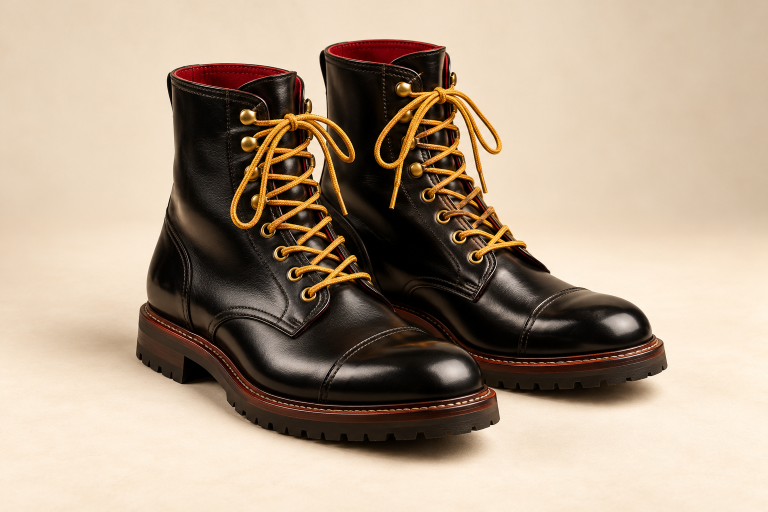
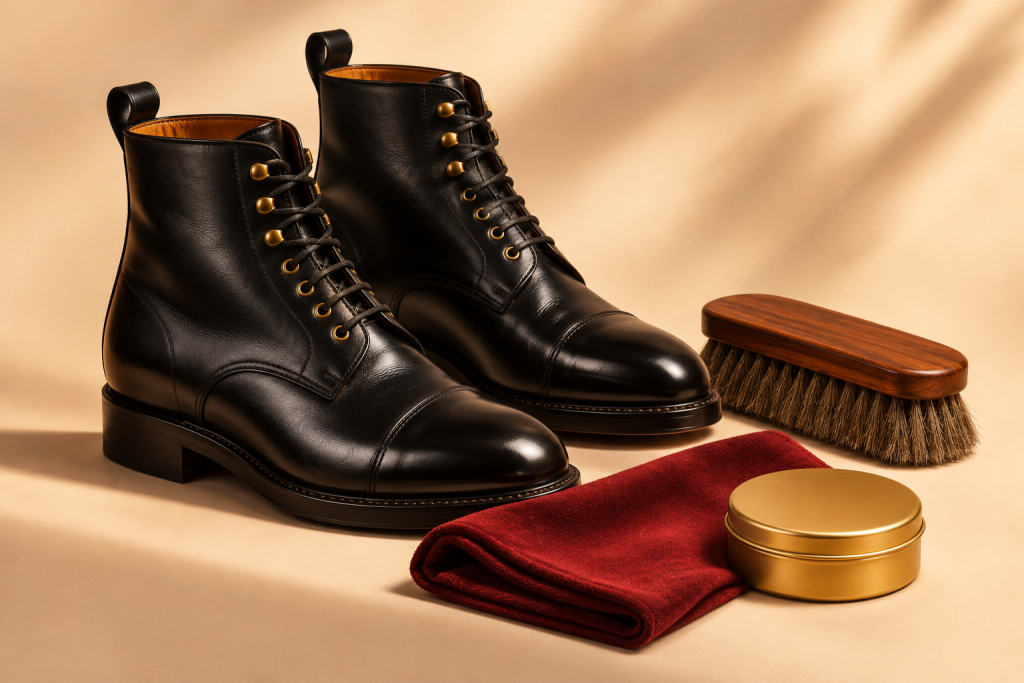
Bootblacking brings attention to the care and presentation of leather footwear. In some leather spaces it is a practical service; in others it also becomes a social ritual, a performance of expertise or an agreed expression of service. Those meanings should be discussed rather than assumed.
A practical trade with a community meaning
Shoe care has a history beyond fetish culture. Within leather communities, caring for boots can connect ordinary maintenance with pride in clothing and appreciation of another person’s skill. It is better to recognise these overlapping traditions than claim that one person invented fetish bootblacking. Archival collections place footwear, dress and social practices within a much wider leather history.
What happens at a bootblacking interaction
The person providing the service and the boot owner agree what care is wanted, whether the boots remain worn, how positioning will work and what conversation or role language is welcome. Some interactions are entirely practical. Others include negotiated service symbolism. A service offered at an event may involve a fee or a tip; clarify that before beginning rather than treating gratitude as unlimited access.
Why people value it
The appeal may lie in craftsmanship, the transformation of a worn surface, sustained attention or the sound and feel of familiar materials. A person receiving care may feel recognised; a person providing it may enjoy competence and concentration. Neither position automatically establishes dominance or submission. Someone can enjoy bootblacking while wanting no other kind of fetish interaction.
Protecting the leather and the people
Check the boot material and maker’s guidance: suede, coated finishes and smooth leather need different care. Work with ventilation and keep care products away from eyes and broken skin. Do not use flammable products near ignition sources. A comfortable seat or raised work surface can reduce prolonged awkward positioning; nobody needs to tolerate knee, wrist or back pain to prove commitment.
Etiquette and consent
Permission to clean a boot is permission for that agreed task. It does not include licking, intimate contact, photography or humiliating language. Ask before photographing a distinctive pair that could identify its owner. At organised events, follow the host’s rules and respect the bootblack’s limits as carefully as the customer’s. Good service includes being able to decline a request or stop.
Continue exploring
Sock Fetish: Fabric, Scent and Intimacy
Sources and further reading
Leather Archives & Museum: What is Leather?
Bishopsgate Institute: UK Fetish Archive
For consenting adults aged 18 and over. Educational information; individual interests and boundaries vary. A cultural source does not establish how common an interest is or replace personal health advice.